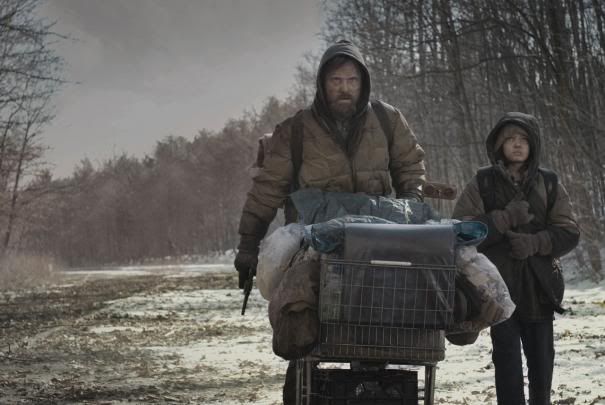
 I finished reading The Road, in which I took great interest, and of which a film has been made, from which the above image is taken. It's about a man and his son surviving in a post apocalyptic land. There was a conspicuous focus on the dreams of these characters. It's interesting to see where the mind wanders in these ultra-bleak circumstances. Dreams are unadulterated thoughts, and the dreams if this dude and kid show their real preoccupations as they scavenge and huddle and sleep in abandoned cars. Says the man,
 "the right dreams for a man in peril were dreams of peril and all else was the call of languor and death."Any sort of idealism is regarded as a flaw in perception and an impediment to survival. Speaking of other mental patterns, he also thinks,
"each memory recalled must do some violence to its origins. So be sparing. What you alter in the remembering has yet a reality, known or not."I had to double take that a few times - sextuple take? Growing further from a memory each time you recall it is terrifying, lofty, but also very true. Even if I write down a memory, or take a picture of it, every time I look back on that text or photo, I'm really only seeing the image again rather than going back to the original experience. I read a similar idea a couple weeks ago in Proust Was A Neuroscientist:
"memories do not directly represent reality. Instead, they are imperfect copies of what has actually happened, a Xerox of a Xerox of a mimeograph of the original photograph. Proust intuitively knew that our memories required this transformative process. If you prevent the memory from changing, it ceases to exist. Combray is lost. This is Proust's guilty secret: we have to misremember something in order to remember it."
Relax - it's time for giant bird heads (c/o Vlad Kato).


No comments:
Post a Comment